
Planned Preventative Maintenance (PPM) for Lifts: A Guide for Lift Owners
A lift that only gets attention when it stops working is a lift that will keep stopping. Planned preventative maintenance, usually shortened to PPM, is the scheduled servicing that keeps a lift safe, compliant and running between visits, rather than waiting for a breakdown to force the issue.
For lift owners, building managers and managing agents, preventative lift maintenance is also the difference between a predictable annual budget and a run of emergency callouts, unhappy residents and costly repairs. This guide explains what planned preventive maintenance involves, how it differs from reactive maintenance, what a good maintenance schedule covers, and why it is the most effective way we know to reduce lift breakdowns.
What is preventative lift maintenance?
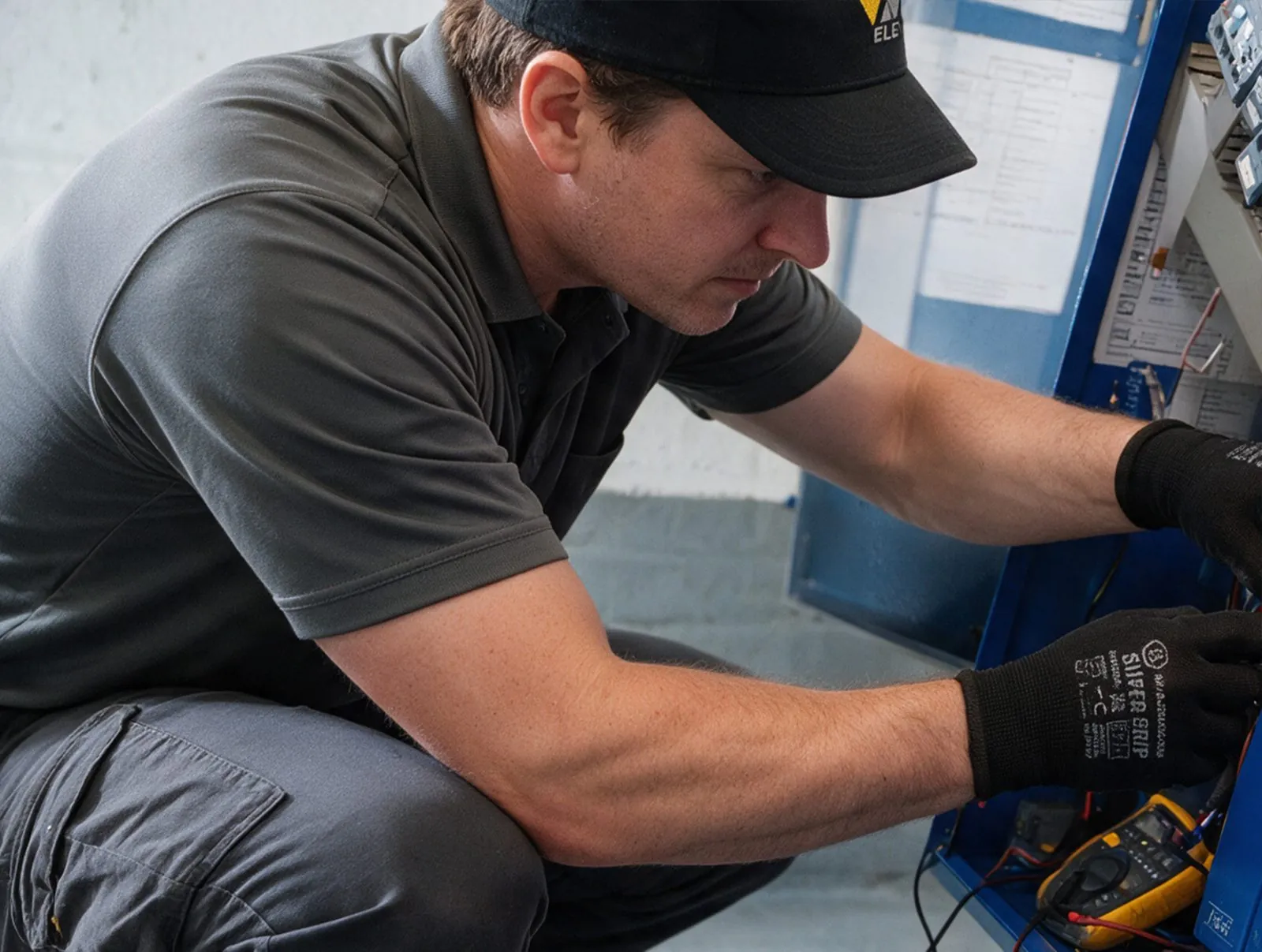
Preventative lift maintenance is a programme of routine lift servicing carried out at fixed intervals, whether or not anything appears to be wrong. Each of the maintenance visits follows a defined scope of inspection, cleaning, lubrication and adjustment, so that signs of wear are found and dealt with before a component fails.
The key word is planned. Visits are booked in advance, the maintenance tasks are set out in a plan based on the lift type, its age and how heavily it is used, and every visit is recorded. Over time those reports on maintenance build a service history that shows how the lift system is performing and where potential issues are starting to develop.
If you have ever wondered what can happen if you neglect lift maintenance, the short answer is more breakdowns, higher costs and compliance risk.
In the UK, lift owners have a legal duty to keep lifting equipment properly maintained under the Provision and Use of Work Equipment Regulations (PUWER) and the Lifting Operations and Lifting Equipment Regulations (LOLER). A documented preventive maintenance programme is the most practical way to ensure compliance with those safety regulations and show that duty is being met.
Preventive maintenance vs reactive maintenance
Reactive, or corrective maintenance, means fixing a lift after it has broken down. It can feel cheaper on paper because there is no regular servicing cost, but in practice it tends to lead to costly repairs and far more disruption.
| Planned preventative maintenance | Reactive repairs & maintenance | |
|---|---|---|
| Timing | Scheduled maintenance visits at set intervals | Only when a fault occurs |
| Downtime | Short, planned and communicated in advance | Unplanned, often at the worst possible time |
| Cost | Predictable, budgeted annually | Unpredictable callout, parts and repair costs |
| Fault severity | Wear and tear caught early, before failure | Faults often found after secondary damage |
| Compliance | Documented history supports LOLER and PUWER | Gaps in records and potential non-compliance |
| Passenger risk | Lower risk of entrapment and door faults | Higher risk of entrapments and repeat failures |
Reactive work will never disappear completely. Lifts are mechanical and electrical systems with thousands of moving parts, and even the best maintained lift can suffer a fault. The aim of a proactive maintenance approach is to make breakdowns the exception rather than the routine.
Where predictive maintenance fits in
Predictive maintenance takes this a step further. Modern controllers and remote monitoring use sensor data to flag developing faults, such as a door operator taking longer to close or a motor running hotter than normal, so an engineer can act before the lift stops. Monitoring and predictive maintenance work best alongside a planned programme rather than instead of one, and are worth considering when a lift is modernised.
What does a lift maintenance schedule cover?
A PPM maintenance schedule sets out how often the lift is visited and exactly what is done on each visit. No two plans will be identical, because a lightly used platform lift in a small office has very different maintenance needs from a busy passenger lift in a hospital or a block of flats.
Visit frequency
Depending on the equipment and how much it is used, we typically recommend anywhere from two to twelve service visits a year. Low use lifts may need a visit every six months, while high traffic passenger lifts in healthcare, hospitality or large residential buildings usually justify monthly visits. Frequency is agreed at the start of the contract and reviewed as usage changes. Our guide on how often your lift should be serviced goes into more detail, and commercial and residential lift maintenance differ in what they need.
Lift maintenance tasks on every visit
Most visits include a core lift maintenance checklist, such as:
- Testing the safety devices, including door safety edges or light curtains, emergency stop switches and the alarm and two way communication system
- Checking door operation on the car and every landing, including locks, rollers and sill tracks
- Checking ride quality and floor levelling for smooth operation
- Inspecting the motor, brake and drive in the machine room or machine space
- Cleaning and lubrication of moving lift components, with adjustments where needed
- Checking car and landing buttons, indicators and lighting
Periodic maintenance activities
Some maintenance activities do not need doing on every visit but must be done at set points in the year. These rotate through the plan and typically include:
- Detailed inspection of suspension ropes, cable or belts, sheaves and guide rails
- Checks on the overspeed governor and safety gear
- Hydraulic oil level, leak and valve checks on hydraulic lifts (see hydraulic vs traction lift maintenance)
- Pit and car top inspections, including buffers, limit switches and shaft lighting
- Controller and electrical panel inspection
Records and reporting
Every visit should be recorded, with the work carried out, any issues that require attention and any recommendations. Our engineers log work on a handheld device that uploads directly to our office, and every customer receives a worksheet covering the engineer’s findings. Anything that needs further attention is passed to our service team so it can be quoted, scheduled and followed up rather than forgotten. You can see exactly what this looks like in our guide to what happens during lift servicing.
How PPM fits with thorough examinations
PPM is not the same as a thorough examination. Under Regulation 9 of LOLER, lifts that carry people must be thoroughly examined by a competent person at least every six months, usually arranged through your insurer, who then issues a written report. Preventative maintenance is the ongoing work that keeps the lift in a condition to pass those examinations and meet safety standards. A good maintenance contractor will also act on any defects the examiner raises.
How planned preventive maintenance cuts breakdowns
The reason preventive maintenance reduces breakdowns is simple: most lift failures do not happen suddenly. They build up gradually through wear, contamination, loosening and drift out of adjustment. A well-structured maintenance plan interrupts that process and catches potential issues before they escalate.
Wear is caught early. Door rollers, gibs, brake linings, contacts and relays all wear over time. Spotting that wear on a routine visit means the part can be replaced on a planned basis rather than failing during the morning rush.
Doors stay in adjustment. Doors are the most common source of lift faults across the lift industry. Regular cleaning of sill tracks and adjustment of door equipment prevents the majority of door related callouts. Our article on lift door problems covers this in more detail.
Lubrication and cleaning reduce strain. Clean, lubricated components run cooler, improve lift performance and extend lifespan. Contamination in the machine room, pit or on guide rails is a common cause of rough rides and nuisance trips.
Patterns become visible. A service history shows repeat faults. If the same landing door keeps tripping, or the lift regularly stops out of level, the records point to the root cause so it can be fixed properly.
Parts can be planned. On older lifts, some components are becoming obsolete. PPM gives advance warning so that parts can be sourced, or lift refurbishment and modernisation planned, before a failure leaves the lift out of service for weeks.
For a closer look at the faults preventive measures are designed to stop, read our guide on why lifts break down.
What preventative maintenance costs, and what it saves
A PPM contract is a fixed, predictable cost. Against that, you avoid a large share of callout charges, reduce repair costs and the risk of expensive secondary damage, extend the working life of the lift, and protect your position if something does go wrong, because you can show the lift has been properly maintained.
There are softer savings too. Fewer breakdowns mean less downtime, fewer complaints, fewer residents with mobility needs stranded on upper floors, and less time spent by building staff dealing with the fallout. For safety and operational efficiency, a planned maintenance strategy is hard to beat.
Our preventative lift maintenance plans
Every one of our lift maintenance contracts is built around routine planned preventative maintenance visits. We offer three levels of cover:
- Standard: routine PPM visits, access to our fully manned 24/7 emergency callout desk, regular condition reports, and consumables, lubrication and adjustments.
- Premium: everything in Standard, plus callout charges included for callouts made between 8am and 5pm, Monday to Friday (excluding bank holidays).
- Premium Plus: everything in Premium, with callout charges included around the clock, and parts and labour for necessary repairs included, subject to terms.
We maintain all makes and types of lift and escalator across London, the Home Counties and major cities across the UK, and we can add further options to any contract where your building needs them. Our engineers are DBS checked, and we work to LEIA standards. We are an independent company with a focus on personal touch and safety.
For more information read our guide to comprehensive lift maintenance and service contracts. If you are weighing up contractors, comparing lift maintenance providers sets out what to ask.
If your lift is currently on a reactive arrangement, or you are not sure your existing maintenance plan matches how the lift is actually used, we can survey it and recommend the right maintenance profile. Visit our lift maintenance services page or call us on 0800 448 8615 to talk it through.
